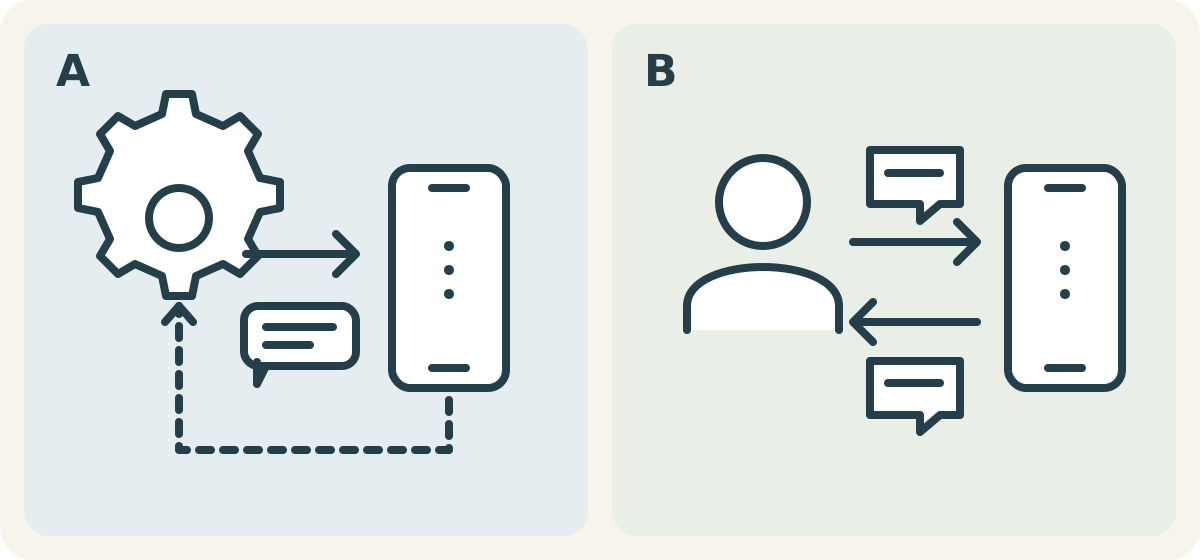
A compares an automated message path; B a human conversation path. The arrows describe communication, not effectiveness or an always-available service.
- A · Automated message
A schedule or recognised keyword selects a text. A quick response is not proof that someone read your question.
- B · Human conversation
A person reads and responds, if the provider offers this. Check hours, waiting time and where unanswered questions go.
Three things that can look like the same conversation
A scheduled message arrives because of the programme timetable. A keyword response arrives because the system recognises a word. A human conversation involves someone reading and responding to your question. One service may contain more than one of these, but they are not interchangeable.
For a concrete US example, NCI's Smokefree FAQ describes on-demand keyword responses and separately directs readers to LiveHelp or a quitline to speak with a trained counsellor. A text saying it is available around the clock is not, by itself, a promise of round-the-clock human attention.
Read the enrolment page, not just the first friendly message
The US CDC National Texting Portal is for adults in the United States and routes users to state or national services. Its English and Spanish options do not make it a worldwide service. The portal asks for location and language; the destination programme can ask for further enrolment information.
On any service, check the operator through its official website rather than trusting an unsolicited sender name. Look for required fields, recipients of replies, message frequency and the privacy notice. If these are unclear, ask the operator before sending a smoking history or other personal details.
Free enrolment and free phone use are different
CDC and NCI state that carrier message or data charges may apply even when programme enrolment is free. Check your plan, especially if messages are charged individually or you use your phone abroad. Do not assume the same charges or short code work in another country.
NCI describes replying STOP and receiving an opt-out confirmation for its own programmes. Other services may use different instructions. Keep the actual exit instruction; blocking a sender is not the same as confirmation that the provider has cancelled the subscription or deleted its records.
A fictional exchange that exposes the missing information
Imagine an enrolment page that says ‘reply whenever you need support’. Before joining, Sam asks: ‘Will a counsellor read my own words, or will keywords select a message? If a person answers, what are the hours and usual waiting time?’ These are questions to ask, not a claim about a particular programme.
If the answer is ‘automated messages only’, Sam can still decide whether reminders are useful, but saves a separately verified counselling contact. Sam also checks lock-screen previews on a shared phone and asks whether ending messages deletes enrolment data or requires a separate request.
When the channel does not fit the question
The automated reminders and general automated texts discussed here are not an examination, prescription or emergency service. Do not interpret no reply as a judgement that a health concern is harmless. For a personal health or medicine question, contact a qualified local professional; for an emergency, use local emergency services rather than waiting for programme messages.
In the United States, the NCI FAQ links to human quitline and LiveHelp support. Elsewhere, find a local public-health or cessation service and ask for its current message and conversation options. You do not need to send information to this website to compare those options.
What to keep in mind
Common questions
Does ‘24/7 support’ mean a counsellor answers at night?
Not necessarily. It can mean an automatic keyword service. Check the explicit description of staffing and reply times.
Can I text my full question to a keyword service?
Do not assume free text is read. Check the permitted reply format and use the disclosed human contact for a conversation.
Do I have to finish the programme?
Check the provider's current opt-out instructions. Ending messages and deleting records are separate questions; keep the cancellation confirmation.
Sources
The central claims on this page were checked against the sources below.
- US National Cancer Institute: Smokefree: text-message programme FAQs (United States)
Sources checked: 2026-10-01
- US CDC: National Texting Portal: eligibility, routing and charges
Sources checked: 2026-10-01
This is a guide to evaluating communication services, not a recommendation of a treatment or a promise that texts will make someone quit. Enrol only with the provider, not on this website.