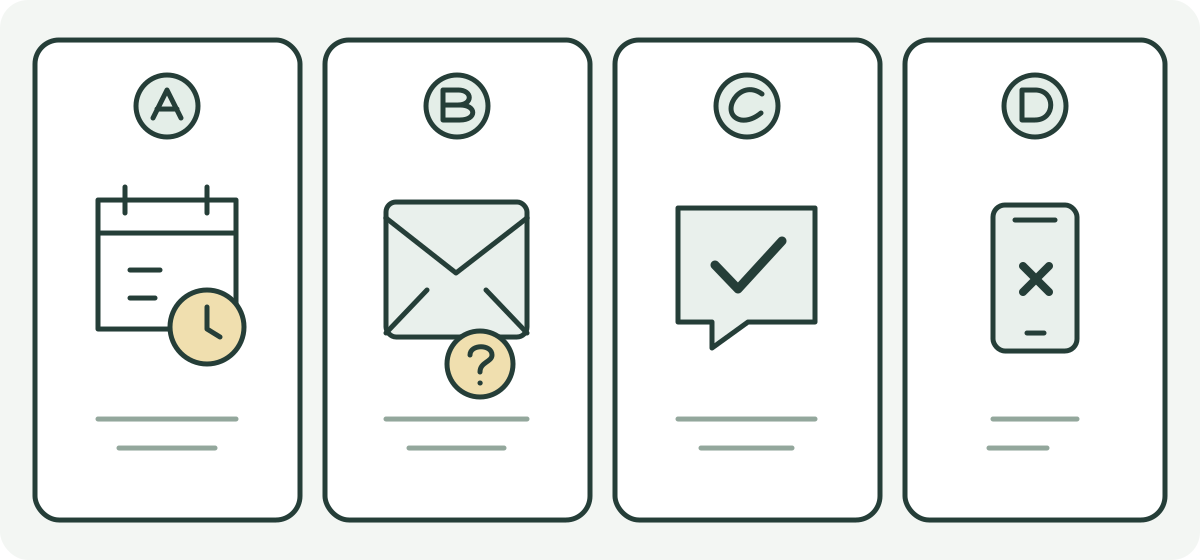
Editorial diagram, not a provider's workflow. A–D are comparison labels, not required stages or a promise that one leads to the next.
- A · Previously arranged
You had agreed a call. Check what applies after missing it.
- B · Request sent
You have asked to reconnect; the new arrangement is pending.
- C · Contact confirmed
The service has stated who calls, when, and by which channel.
- D · Not connected
No contact was established. Use the service's stated next route.
Start with the arrangement you actually had
Was a particular call booked, were you waiting after a referral, or did an unfamiliar number simply appear? Those are different situations. If there was no agreed appointment, describe ‘a possible service call’, not ‘my missed appointment’.
Find the contact route on the provider's official page or information you obtained directly from it before this call. Contact that route separately. Displayed numbers, names and a message claiming to be the service are not your confirmation of who contacted you; do not send health notes or documents in reply while that is unresolved.
A rescheduling request is still a request
Fictional example: a Tuesday afternoon call was booked, but you had no signal. You ask: ‘I missed our arranged call. Could you tell me how to reconnect? Wednesday morning would suit me; has anything else changed?’ Until the service replies, Wednesday is your proposal, not an appointment.
If the reply offers Thursday afternoon, decide whether you can accept that time. Close the practical details: local time and time zone, incoming or outgoing call, which channel to use, and what to do if the connection fails again. Keep the old reminder until its status is clear; replace it when an actual revised arrangement has been agreed.
Check this provider's rule, not a general quitline rule
In the United States, CDC explains that 1-800-QUIT-NOW routes people to state quitlines and that eligibility can vary by state. It also describes arranging a callback when an intake line is busy. That busy-intake example does not state how a missed scheduled call will be handled.
Ask your actual service whether you should call, await contact or request a new slot, and whether your existing registration remains active. If the official information is silent, keep the answer unknown. Do not infer a retry deadline, a free medicine entitlement or a loss of access from the missed call.
Make the next contact reachable and private
Offer a time when you can answer without driving, operating equipment or being overheard. Ask whether staff leave voicemail, what it says and whether a different channel is available if your phone is shared. A useful request is: ‘Please explain the voicemail options before we agree the next call.’ The service may have limits; a preference is not yet its agreement.
You can begin with the missed-call and scheduling question rather than a full smoking history. If staff need information to find your record, use the verified channel and ask what is needed. Keep contact details and messages in a private place you control, not in a public calendar, shared link or this website.
If you still have not reached anyone
Use any next-contact instruction the service actually publishes. When none is stated, ask through its official contact route when and how to check again; avoid treating repeated unanswered requests as new confirmed appointments. Continue an ordinary smoke-free activity you can carry out without an immediate reply.
Do not change a medicine or clinical instruction while waiting. Take those questions to the responsible professional. A routine quit-service callback is not the route to wait for in an immediate emergency or crisis; use appropriate local urgent help.
What to keep in mind
Common questions
Should I register again immediately?
Ask the provider first. This page cannot determine your registration or eligibility, and one missed call does not establish either outcome.
Can I just return the displayed number?
Use an independently checked official route to confirm the contact first. Matching digits or a familiar-looking message do not replace that check.
Sources
The central claims on this page were checked against the sources below.
- US Centers for Disease Control and Prevention: Quitline intake, callbacks and state-specific eligibility
Sources checked: 2026-10-01
This page organizes recontact, not treatment, caller authentication or a decision about eligibility. Service access, costs and missed-call handling belong to the actual provider; individual care belongs to qualified professionals.