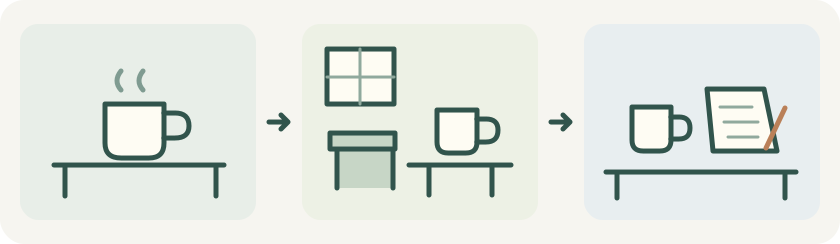
The arrows show Alex’s chosen sequence, not a craving countdown or evidence that this arrangement prevents smoking.
- Collect the cup
The destination was agreed beforehand.
- Use the agreed seat
Coffee and company need not require the smoking doorway.
- Return to the task
The end of the break also has a chosen next step.
Does the urge start at the cup—or at the door?
Think about an actual occasion without testing yourself with cigarettes. Did the urge appear while the machine was running, when someone said ‘outside?’, or when you finished and stood up? Those are different points in the sequence. A coffee break can combine an activity cue, other people smoking and background nicotine withdrawal; one occasion does not diagnose which mattered most.
The useful part of the break might be rest, company or a change of scene. Removing all of that can leave a different practical problem. Choose a version that keeps the purpose without requiring you to follow the old smoking step. This is a routine arrangement, not a promise that an urge will disappear.
Choose the destination before collecting the cup
Wholly fictional example: Alex collects coffee, then normally walks through the side door with colleagues who smoke. The new arrangement is made before the break: take the cup to an agreed smoke-free seat, and tell one colleague ‘I’ll join you for coffee there, but not for the cigarette.’ If that seat is unavailable, use another agreed place rather than making the old doorway the default.
When the break ends, Alex takes the cup back and returns to the task. The change is the destination and transition, not a requirement to drink faster, replace coffee with alcohol, or hold a cigarette to see whether it is tempting. If an urge remains, another ordinary activity away from smoking or a conversation with a supporter is an option. An arrangement that proved impractical can be revised; do not force repeated exposure to prove it works.
‘I want to smoke’ and ‘coffee feels different’ need different explanations
Stopping smoke exposure can also change caffeine handling, so caffeine may remain in the body longer. The smoke-related enzyme effect is not caused by nicotine itself. That mechanism is separate from seeing the old smoking doorway. A new feeling does not identify its cause, and this page gives no cup limit, caffeine-reduction percentage or schedule.
For persistent or worrying health concerns, ask a qualified healthcare professional. If you take medicines, tell the prescriber or pharmacist about changes in smoking; do not adjust a dose from a coffee example. For the routine itself, NHS local stop-smoking services provide support in England. No drink diary, medicine list or smoking history is entered here.
What to keep in mind
Sources
The central claims on this page were checked against the sources below.
- National Cancer Institute: Handling Nicotine Withdrawal and Triggers: coffee/tea situations and changing the routine
Sources checked: 2026-10-08
- Centers for Disease Control and Prevention: 7 Common Withdrawal Symptoms: learned coffee cues and caffeine lasting longer
Sources checked: 2026-10-08
- NHS Specialist Pharmacy Service: Considering drug interactions with smoking: smoke, not nicotine, induces enzymes; professional medicine review
Sources checked: 2026-10-08
- NHS: England: local stop-smoking support
Sources checked: 2026-10-08
General routine planning, not a craving treatment, caffeine prescription, diagnosis or guarantee of abstinence.