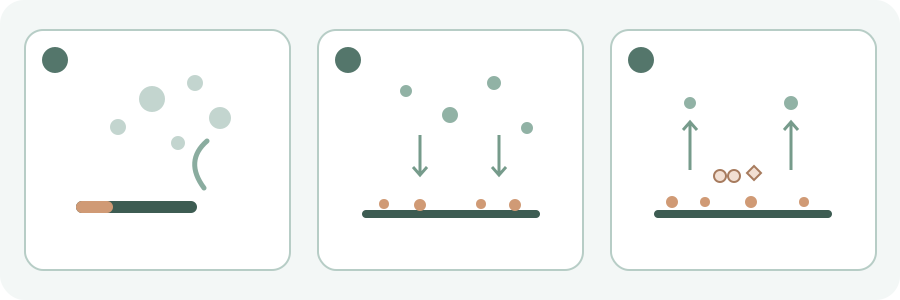
Conceptual diagram, not measured quantities. Air and surfaces interact during and after smoking; not every substance follows the same route.
- Airborne mixture
The event introduces gases and particles into the room.
- Surface deposition
Some components reach materials while others remain airborne.
- Residual chemistry
Retained components can persist, react or be released again.
A fading cloud answers only part of the question
Smoke leaving the visible air is not the same as all its components leaving the room. Air and materials are different places to look: walls, furniture, textiles and other surfaces can retain some substances. The indoor history also matters—an apparent single new event may occur in a room with older residues.
A useful question is therefore not only ‘Is the air clearer?’ but ‘Which phase and which substance does this observation describe?’ A particle number does not describe every gas or a deposit on fabric. This distinction does not provide a home measurement method, nor a way to declare a room safe.
What a one-cigarette laboratory experiment actually showed
A 2024 study used one research cigarette for each experiment, with sidestream smoke introduced into a small glass chamber. Researchers compared deposited films on clean glass and glass with selected organic coatings, then analyzed extracted material using mass spectrometry. This controlled chemical setup was not a furnished home or a health study.
Different measured components did not all move in the same direction: some signals fell, some stayed relatively stable and oxidation-product signals increased. The measurements were relative to an initial extracted sample, not an absolute amount remaining in a home. Repeated instrument injections assessed measurement variation; they were not different households.
The chamber was sealed for incubation and remained a smoke-containing system. A component declining on a glass sample could reflect transformation or movement between phases, not removal of the complete mixture. The study's time curves cannot supply a household clearance deadline, a safe re-entry time or a cleaning guarantee. The public source here is the deposited accepted manuscript, not a claimed inspection of the final typeset article.
Use the distinction to decide what to ask next
After a known indoor event, keep the description factual: where it occurred, whether new smoking continues and which room materials are involved. A generic illustration or laboratory graph cannot assign a dose to the people who were there. Do not create more smoke at home to compare before-and-after readings.
EPA states that ventilation and air cleaning can reduce secondhand exposure, not eliminate it. Avoiding new indoor smoking addresses the source; evaluating existing material concerns is a separate job for appropriate building or indoor-environment professionals. Personal health concerns should be discussed with a qualified clinician rather than resolved by a disappearance timer. In England, NHS Better Health offers stop-smoking support independently of a room assessment.
What to keep in mind
Sources
The central claims on this page were checked against the sources below.
- US Environmental Protection Agency: Airborne emissions, surface reservoirs and incomplete removal by ventilation
Sources checked: 2026-10-08
- Environmental Science: Atmospheres / Hurlock and Collins; NSF Public Access Repository: 2024 original experiment: surface-film chemistry after one research cigarette; publicly deposited accepted manuscript
Sources checked: 2026-10-08
- NHS Better Health: England: stop-smoking information and support
Sources checked: 2026-10-08
General environmental explanation; no individual medical risk estimate, testing procedure, smoke-generating experiment, remediation prescription or safe waiting period.