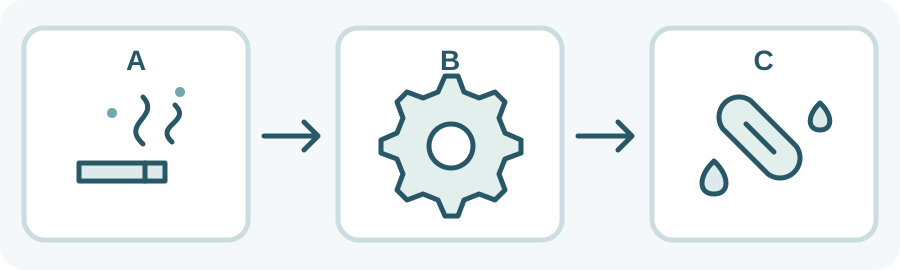
Read A, B and C with the explanation below. This pathway is not a complete map of nicotine’s effects or all medicine interactions.
- A — Smoke compounds
Certain compounds come from tobacco smoke, not from nicotine alone.
- B — Enzyme activity
Some enzymes involved in medicine metabolism become more active.
- C — Medicine processing
Some medicines may be processed differently; the team determines relevance to your treatment.
The mechanism concerns some enzymes and some medicines
Enzymes help the body process substances. The NHS Specialist Pharmacy Service explains that certain compounds in smoke can induce some of these enzymes—meaning they become more active. Certain medicines may then be broken down or cleared more quickly.
Starting, reducing, stopping or restarting smoking can therefore matter when a professional reviews those medicines. It is not a claim that every medicine changes in the same way or that a reader can calculate a new dose from smoking history.
‘I still use nicotine’ leaves another question unanswered
That sentence does not tell the prescriber whether you still inhale cigarette smoke. Someone who stops cigarettes but continues a nicotine-containing product has changed the smoke exposure even though nicotine use continues.
The distinction is about the smoke-related enzyme mechanism, not a declaration that vaping or nicotine replacement has no interactions or is suitable for everyone. Both parts of the account remain relevant to the conversation.
A complete message with an existing medicine list
Fictional example: ‘I’ve stopped smoking cigarettes, but I’m still using a nicotine-containing product. This is my current medicine list, including non-prescription products. Do you need any more details about the change, and does it affect the instructions you have already given me? Who will follow this up?’
Bring or show the list you already use at your appointment or pharmacy. The example is a way to communicate a change, not a recommendation to switch products. You do not need to enter your medicine list on this website.
Contact the people responsible for the treatment
Alberta Health Services advises people taking medicines to discuss plans to reduce or stop smoking with a doctor or pharmacist. If the change has already happened, describe that too. Use your own prescriber or dispensing pharmacist; the Canadian source does not establish a local service where you live.
Follow the specific instructions your treatment team has given you. If you have no new instructions for your situation, do not change treatment based on this article; ask the team to clarify what applies. This is not a reason to continue smoking to preserve a medicine’s effect.
What to keep in mind
Common questions
Is telling a stop-smoking adviser enough?
Do not assume another conversation has updated the people prescribing your medicines. Ask how the change will reach that team or contact your prescriber or pharmacist directly.
My medicines did not change. Is the smoking change still worth mentioning?
Yes: the change you are reporting is smoking, not necessarily a new prescription. The team can determine whether any of your existing medicines are affected.
Sources
The central claims on this page were checked against the sources below.
- NHS Specialist Pharmacy Service, UK: Considering drug interactions with smoking — published 2023-10-31, updated 2023-11-08
Sources checked: 2026-10-02
- Alberta Health Services, Canada: How smoking affects medicines and caffeine in your body — current as of 2024-10-18
Sources checked: 2026-10-02
General adult education, not a drug list, dose adjustment, interaction clearance or instruction to replace your treatment team’s advice.