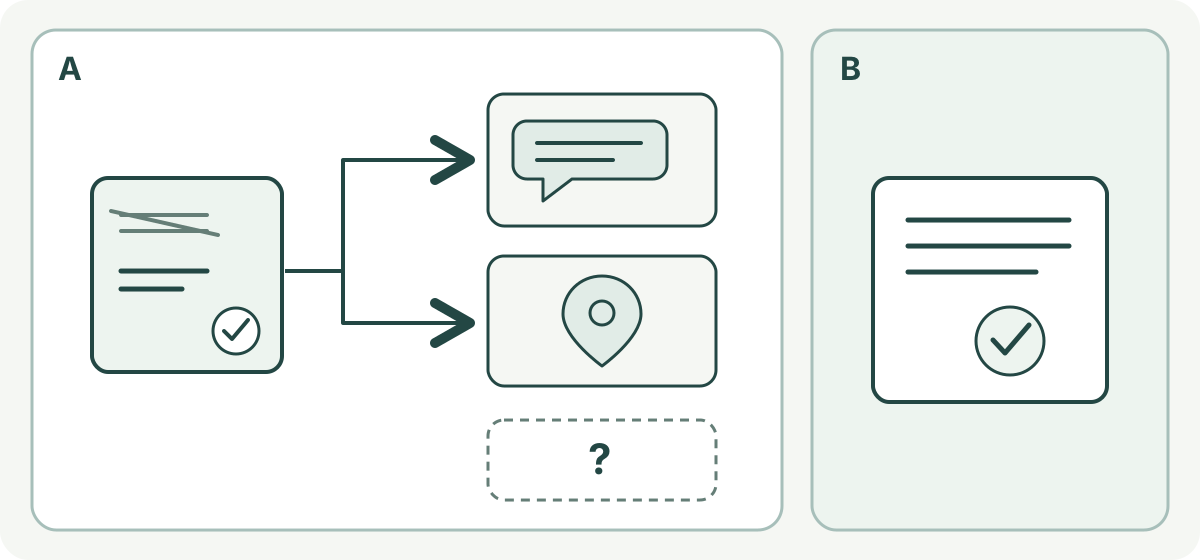
The branching arrows show what depends on the new fact. The separate card stays unchanged; the dotted card still needs confirmation.
- A · Update connected arrangements
Change the agreed contact request and its practical setting together if both relied on the old fact.
- B · Keep unrelated preparation
A refusal sentence may still fit. A change elsewhere does not erase it.
- ? · Leave unconfirmed items open
Do not mark a new appointment or support agreement complete before the other party confirms it.
Is it confirmed, or still something to check?
‘My friend can no longer answer after work’ is useful information if your friend actually told you. ‘They probably do not want to help’ is an interpretation. A changed clinic contact should be checked on its official page or with the service, not inferred from an old search result.
You can leave a line marked ‘not confirmed’. While checking, choose an ordinary smoke-free action available to you rather than make the whole plan depend on a reply. Asking which number or contact window to use is different from receiving a clinical consultation, where the service may need relevant history.
Follow the practical dependency
WHO's guide includes planning, asking for support, anticipating situations and readjusting a plan. For this review, identify the parts that still assume the old information.
For each affected arrangement, name what must be checked or changed. A newly available contact window might alter both the request and where you can make contact. It does not automatically change the refusal sentence you already prepared. Keep a short reason for each update so you can see why the connected parts changed.
Worked example: a supporter has changed shifts
Fictional example: you and a friend agreed on a short call after your shift. Your friend confirms that evenings are unavailable and says there may be time during the day. You check that you may use your phone during your first break at work and choose a smoke-free place where you can read a private reply.
You ask for a short message exchange during your first break. Replace the reminder with that new arrangement only after your friend agrees to the time and format. You keep the refusal sentence for cigarette offers. If the friend has not confirmed the new arrangement, it remains pending: the fallback is your own ordinary break activity, not repeated messages demanding an answer.
Do not leave the old instruction running beside the new one
If you use reminders, edit or retire the affected reminder rather than let the old and new requests compete. A short private note can retain the reason: ‘evening call no longer available; daytime message agreed’. Keep an uncertain item separate from an agreed one.
A service appointment needs agreement from that service, not just an edit to your calendar. If new information concerns a medicine or an existing clinical instruction, ask the responsible clinician or pharmacist; this article does not authorize changing it. You can still update unrelated ordinary arrangements while that question is unresolved.
Ask the service a question it can answer
A useful question is ‘My available time changed; which contact options can I actually use?’ NHS Better Health describes sessions at different times and through different channels. That describes possible arrangements, not a promise that every local service offers all of them.
In the UK, the NHS service page gives separate routes for England, Scotland, Wales and Northern Ireland. The 0300 123 1044 route is for England. Check the service for your location; outside the UK, use a qualified local provider or your health authority's route.
What to keep in mind
Common questions
Do I have to wait until I have smoked again to update the plan?
No. If a confirmed fact already makes an arrangement unusable, you can address it before it is needed. You can keep preparation that remains usable.
What if several things have changed?
List the confirmed facts separately, then group the arrangements that depend on each. Make the necessary connected updates and keep the reason for each clear.
Should I send everyone the revised plan?
No. Contact only people whose agreed request needs changing, and share the relevant request rather than the whole private record.
Sources
The central claims on this page were checked against the sources below.
- World Health Organization: Quit today — planning, support and readjustment; no body update date stated
Sources checked: 2026-10-01
- NHS Better Health: Explore your support options — session times and channels; England helpline
Sources checked: 2026-10-01
- NHS: Local service routes by UK nation — reviewed 1 September 2026
Sources checked: 2026-10-01
General planning suggestions, not individual treatment or a forecast of quitting. No plan is entered on this site; a brief private note can stay on paper.