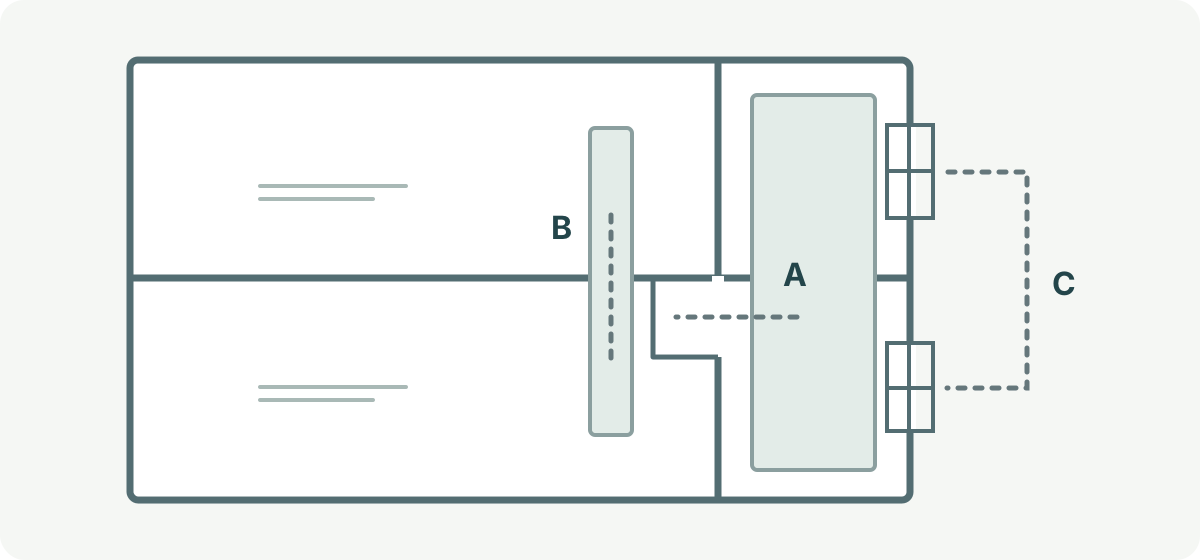
This is not a plan of your building. A, B and C are parallel possibilities, not a route you should infer from smell.
- A — Doorway
Describe where you noticed the odor; do not assume the corridor was the source.
- B — Services
A building professional can assess relevant penetrations; do not block them yourself.
- C — Outside opening
State a window’s position only if you know it. Unknown remains unknown.
A report that leaves the unknowns in place
Fictional editorial example: ‘Around 7 pm, I noticed an odor like tobacco smoke beside my front door. I did not see anyone smoking. I don’t know whether the window was open at the time. Who should I contact to discuss a building assessment?’
This is more useful than ‘Apartment 4 caused it’ when you have not established a source. It separates a place and time you noticed something from the cause you do not know.
Possible routes are not a diagnosis of your building
The EPA describes smoke moving between rooms and apartments. Its neighbor-apartment information also lists building openings such as doorways and gaps around services as possible routes. Those are possibilities to be assessed, not evidence that a particular opening—or a particular neighbor—caused this episode.
Ask for the contact and the next response, not an instant verdict
A second editorial example: ‘I’ve described what I noticed. Is there a person who can look at the building’s arrangements? What is the next step, and how will I hear back?’ The contact might be the manager, landlord or another person named in your building information. Confirm who actually handles the issue instead of assuming a universal service.
If you agree on a next step, keep that step distinct from a completed assessment: ‘The manager will ask the maintenance team’ is not ‘the route has been found’ or ‘the problem has been solved.’ If no response arrives, follow up through the same verified channel with the earlier request.
US information is a starting point, not a promise of a remedy
The EPA’s US neighbor-apartment page points to housing policies and local health or legal information as possible resources. It does not establish your lease, the responsible person or the result of a complaint. Use the channel appropriate to your own location and building.
Do not turn a possible route into a DIY sealing job
Do not block vents, fire-safety openings or equipment needed for combustion and ventilation. Ask the responsible building professional to assess any proposed work. Nor should you enter another resident’s space or collect their private health or smoking details to support your request.
This article concerns smoke arriving from elsewhere in the building or through an outside opening. Smoking in another room of your own home is a different question; old residue in seats, walls or dust is another. A smell-free moment does not settle either one.
What to keep in mind
Common questions
Does tobacco-like odor prove which neighbor smoked?
No. Your observation does not identify a person or an air route. Use wording such as ‘an odor like tobacco smoke near my door’ if that is what you know, and leave the source unknown.
Should I open every window or run a stronger fan?
Those actions are not a guarantee that outside or cross-unit smoke is eliminated. This page cannot assess your building’s airflow. Ask a qualified building contact about the specific situation rather than experimenting with shared ventilation.
Will the manager have to fix it?
This page does not decide legal duties or promise a remedy. Ask who handles the issue under your building’s arrangements and consult current local housing information if you need advice about your rights.
Sources
The central claims on this page were checked against the sources below.
- US Environmental Protection Agency: Secondhand tobacco smoke and indoor air quality — rooms and apartments; updated 2026-04-22
Sources checked: 2026-10-01
- US Environmental Protection Agency: Secondhand smoke from a neighbor’s apartment — US housing information; updated 2025-11-13
Sources checked: 2026-10-01
General building and environmental-health information with fictional examples. No source attribution, personal-dose calculation, building design instruction or legal finding.