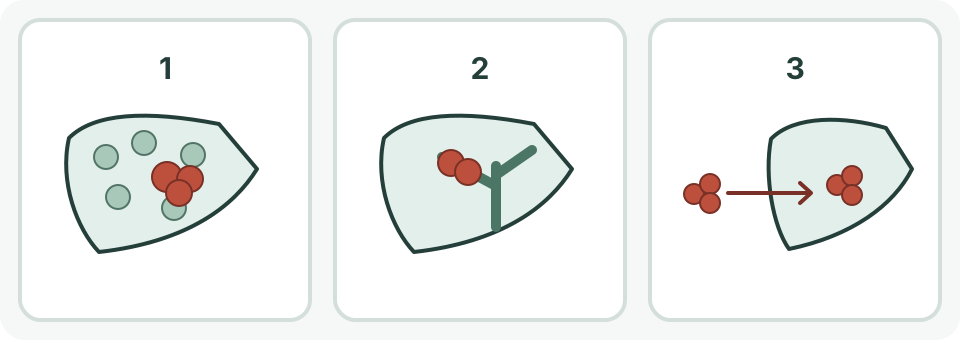
Conceptual cell origins, not tumour proportions, anatomy to scale or stages of one disease. The three numbered panels are alternatives, not a progression.
- 1 · Liver cells
Hepatocellular carcinoma starts in hepatocytes.
- 2 · Intrahepatic bile duct
A primary bile-duct cancer inside the liver is not HCC.
- 3 · Another organ
A metastasis keeps the identity of the cancer where it started.
A liver location is not the same as a liver origin
HCC starts in hepatocytes, the main liver cells. Intrahepatic cholangiocarcinoma starts in cells of bile ducts within the liver. Both are primary cancers, but evidence about HCC is not automatically a finding about every bile-duct cancer.
A liver metastasis began in another organ. For example, bowel cancer that spreads to the liver remains metastatic bowel cancer; it does not acquire the causes of HCC because of its new location. This is an explanatory example, not a diagnosis of any liver finding.
Chronic liver disease provides a background, not a compulsory sequence
Persistent HBV or HCV infection can cause long-lasting liver inflammation. Repeated damage and repair, and sometimes fibrosis and cirrhosis, create a setting in which HCC is more likely. Cirrhosis means extensive scarring; it is not another word for cancer, and not everyone with hepatitis or cirrhosis develops HCC.
HCC can also occur without cirrhosis, including in people with chronic HBV. Heavy alcohol exposure, metabolic fatty-liver disease and some other conditions contribute to the wider picture. ‘I do not drink’ therefore does not rule out a liver problem, just as a smoking history does not explain all of it.
Smoking is an additional carcinogenic exposure, not a replacement name for viral hepatitis. Infection, alcohol, metabolic conditions and tobacco can coexist. Their population associations cannot be added into a personal score or divided into percentages of blame.
What the Singapore study adds to ‘it is just alcohol’
A real 2011 Singapore Chinese Health Study analysis found a higher incidence of HCC among current smokers after accounting for alcohol and other measured factors. The association also persisted when daily drinkers were excluded. That supports retaining tobacco in the explanation rather than treating it as a stand-in for drinking.
It was an observational study using smoking and drinking reported at entry. Viral markers were measured in a smaller nested subset, not every participant, and the virus-negative subgroup was too small for a precise conclusion. Habits could change later. The example informs a population explanation; it does not identify the cause of one tumour or interpret a reader's hepatitis results.
Stopping tobacco is not clearing an infection or checking the liver
Stopping smoking ends an ongoing tobacco exposure; it does not clear HBV or HCV, confirm that scarring has disappeared or cancel existing care. Ask a qualified clinician whether a discussion concerns infection, chronic liver disease or a tumour's exact origin. The England NHS directs personal symptom questions to a GP; elsewhere use your local service. Known liver disease or cancer belongs with its treating team. Testing, surveillance and medication depend on clinical context, not an online smoking history. Immediate emergencies require local emergency services.
What to keep in mind
Sources
The central claims on this page were checked against the sources below.
- U.S. National Cancer Institute: Primary liver cancer, hepatocellular carcinoma, bile duct cancer and metastasis; May 2024
Sources checked: 2026-10-10
- U.S. National Cancer Institute: HCC risk: chronic hepatitis, cirrhosis and tobacco; May 2024
Sources checked: 2026-10-10
- U.S. National Cancer Institute: Hepatocellular cancer prevention PDQ: smoking causal evaluations, confounding and chronic liver disease
Sources checked: 2026-10-10
- British Journal of Cancer / NIH manuscript archive: Koh et al. 2011 Singapore Chinese Health Study: incident HCC and alcohol-adjusted smoking; limited viral subset
Sources checked: 2026-10-10
- NHS: England NHS: primary versus secondary liver cancer and GP role; reviewed June 2023
Sources checked: 2026-10-10
General population education; no attribution of an individual's cancer, personal risk estimate, blood-test interpretation, screening rule, treatment selection or liver recovery promise.